





Long-haul travel in economy often comes with one familiar challenge: staying comfortable while seated upright for hours. A new approach is changing that experience on select flights, offering travelers a chance to lie flat in shared sleeping pods during the journey.
Air New Zealand is preparing to introduce a new sleep feature called Skynest on its Boeing 787-9 Dreamliner aircraft. These enclosed bunk-style pods will be available for economy and premium economy passengers on the Auckland to New York route, a journey that stretches around 16 to 18 hours.
Instead of spending the entire flight in a seat, travelers can reserve a four-hour session inside these pods. Pricing is expected to begin at 495 New Zealand dollars, roughly 291 US dollars, in addition to the standard economy fare.
The airline has described this as a world-first concept, bringing lie-flat sleeping arrangements to budget seating.
How the Skynest Experience Works
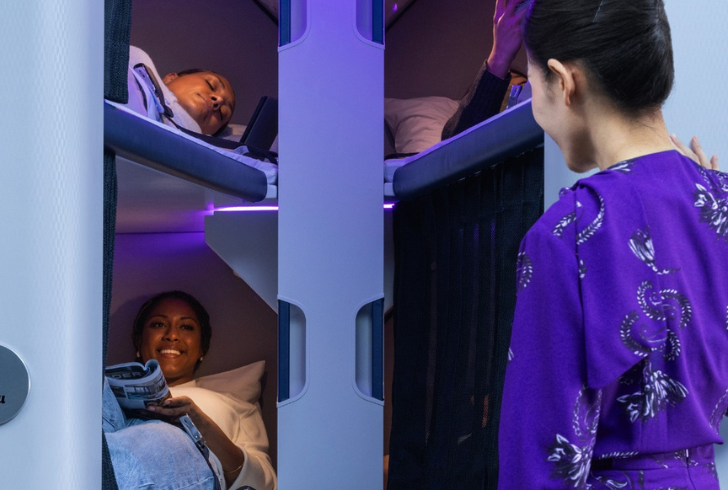
Instagram | nbcnews | Air New Zealand is launching "Skynest" sleep pods for long-haul economy flyers on its Auckland-New York route.
The sleep setup includes six pods arranged in a triple-tier bunk configuration located between cabins. Each pod is designed for individual use only, with bookings restricted to one traveler at a time.
Air New Zealand has outlined clear usage rules to manage shared space and comfort. The airline states on its website, “solo snoozes only please, no musical nests or tag-teaming,” making it clear that rotation or shared use is not permitted.
Travelers will enter the pod using steps that may require bending or crawling due to limited access space. Once inside, passengers receive bedding that includes pillows, sheets, and blankets. The airline notes these items “are all refreshed” between each four-hour session.
Rules, Comfort, and Onboard Etiquette
To maintain cleanliness and comfort, several guidelines apply inside the pods:
1. No eating or snacking inside the sleep area
2. No children or additional guests allowed
3. Strong perfumes or scented products are discouraged
4. Special socks must be worn before entering
Passengers are also expected to fasten seatbelts over their blankets while resting. Earplugs will be provided to help reduce disturbance from surrounding cabin noise, including snoring.
The airline adds a light touch of humor in its guidance: “Statistically, someone’s going to do it. It might be you.” This refers to snoring during the rest period.
Each pod measures around 80 inches (203 cm) in length, allowing full-body stretching. Width varies from about 25 inches (64 cm) at shoulder level to 16 inches (41 cm) near the feet. Sitting upright inside the pod is not possible due to limited headroom.
Flight Context and Airline Strategy
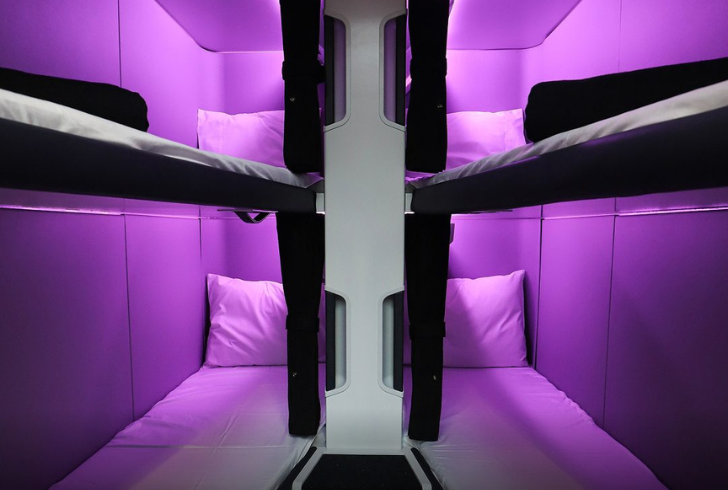
Instagram | nytimestravel | Air New Zealand is pushing forward with Skynest despite fuel hikes and schedule adjustments.
The Skynest concept was first announced in 2020 and has since moved closer to rollout. Its arrival comes during a period of financial pressure for airlines, including rising fuel costs linked to global conflict in the Middle East. Air New Zealand has previously paused its earnings outlook and adjusted parts of its domestic schedule in response to market conditions.
Alongside fare adjustments and route changes, airlines have been exploring additional services for economy travelers. Sleep-focused upgrades like Skynest reflect a shift toward optional add-ons that enhance long-haul comfort without changing base ticket structures.
Lighting changes inside the pod will gently signal the end of each session, though crew members may also assist in waking passengers if needed.
Air New Zealand’s bunk-style sleep pods introduce a new layer of comfort to long-distance economy travel. By offering short, bookable rest periods in a lie-flat space, the airline brings a different rhythm to ultra-long flights like Auckland to New York.
While shared proximity and strict etiquette rules shape the experience, the concept reflects a growing focus on rest and personalization in economy cabins, especially on some of the world’s longest routes.